Car key finder
Pick your make, model and year to see the key your car most likely takes and the typical price range. Then call us, and we confirm it with your VIN before we drive out.
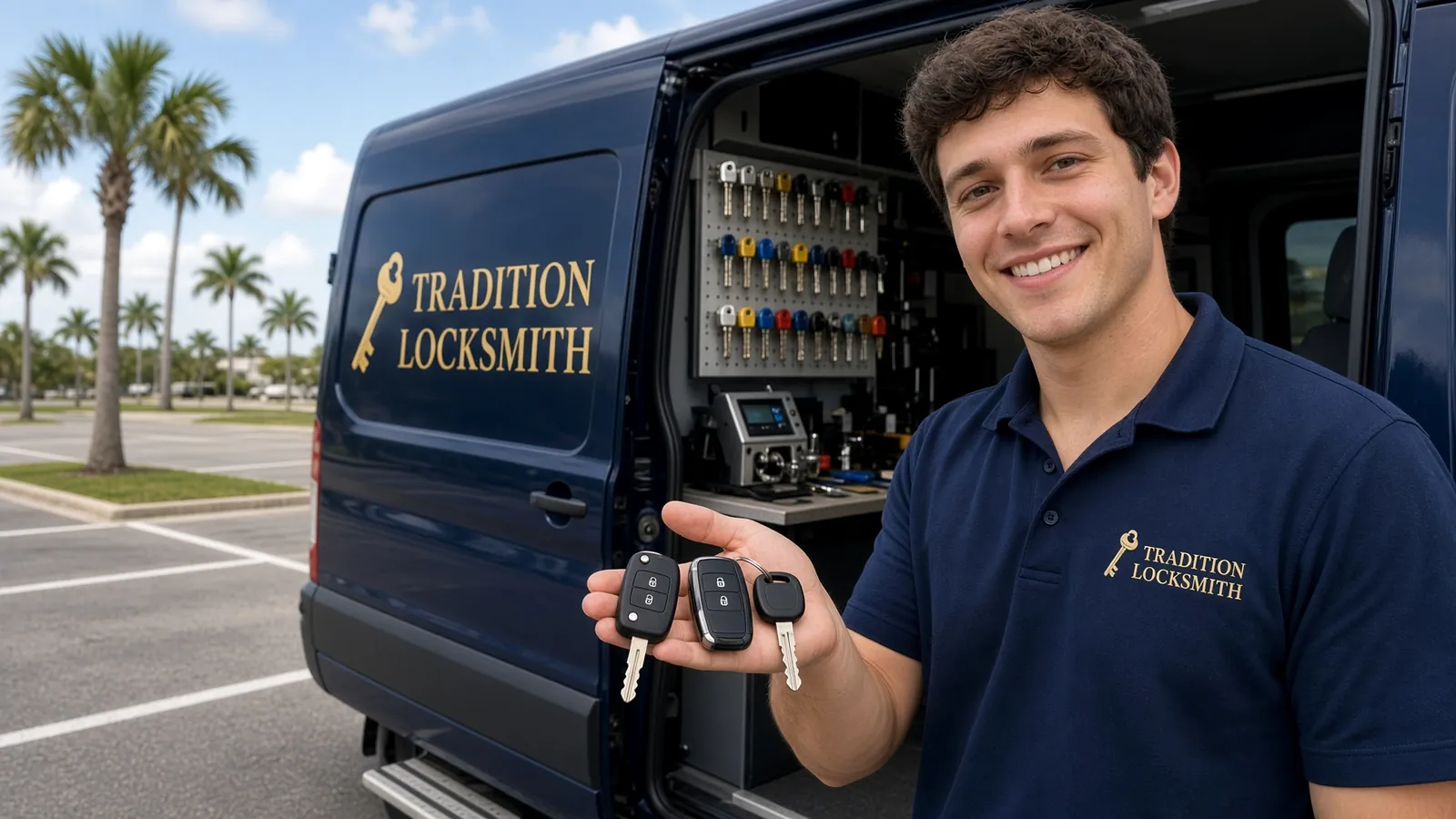
Quick answer
Most cars built before the late 1990s use a plain metal key. From about 1996 to 2000, most brands added a transponder chip key that must be programmed. Remote head keys followed in the 2000s, and push-to-start smart keys became common in the 2010s. Your exact key depends on make, year and trim, so we confirm it by VIN.
Free tool
Choose the brand on your car. If you drive a BMW, Mercedes-Benz, Audi, Volkswagen, Porsche or Mini, the tool will tell you we do not service it.
The year matters most. Car brands changed key types over time, so a 2002 and a 2016 of the same model can take very different keys.
The tool shows the key type that is most common for that make and year, a short note, and the typical price range for that kind of key.
We look up the exact key for your car and give you the total price on the phone before we drive out.
Almost every car we work on uses one of these.
A plain cut key with no chip. Common on most cars from before the late 1990s. It only needs to be cut, not programmed.
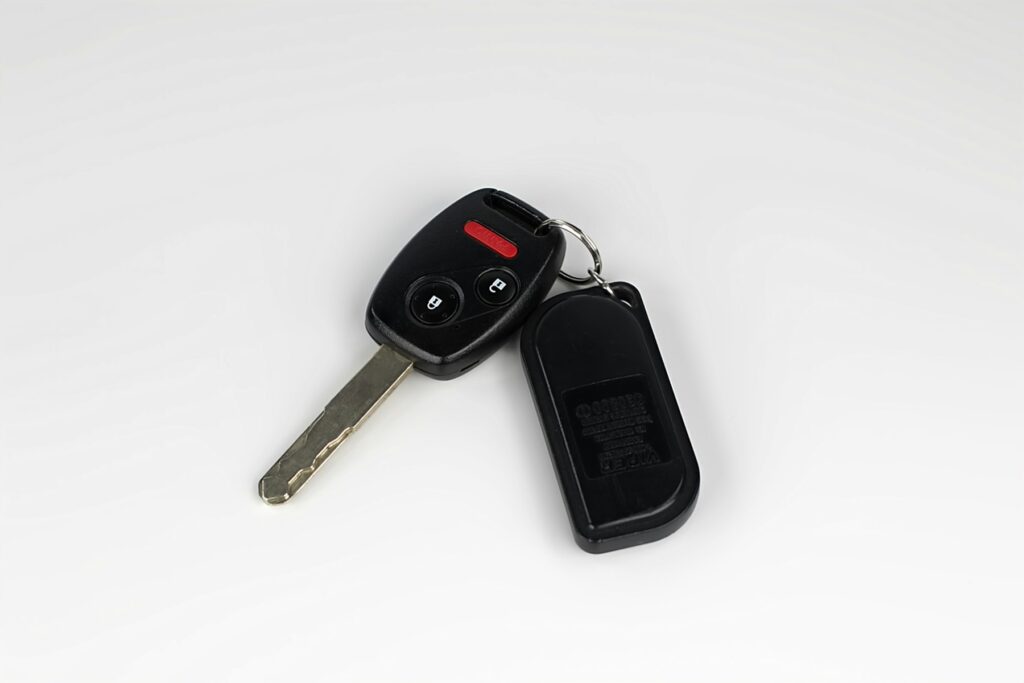
Looks like a normal key, but a chip in the head talks to the car. If the car does not recognize the chip, it will not start. Typical range $150 to $275.
The chip and the door buttons are built into one head. Flip keys fold the blade away. Typical range $200 to $400.
A fob that stays in your pocket or bag while you press a start button. It still hides a small metal blade for the door. Typical range $200 to $400.
The finder is a good first guess, not the final answer. Car brands rolled out new key types model by model and trim by trim. A base trim may use a turn-key flip key while a higher trim of the same car, same year, uses a push-to-start smart key.
Hyundai and Kia are a clear example. Many base trims from about 2011 to 2021 were sold in the US with a turn-key ignition and no engine immobilizer, while push-to-start trims of the same years had one. That changes which key and which programming your car needs.
The VIN clears all of this up. You can find it on the dashboard by the windshield, on the driver door jamb, or on your registration or insurance card. Read it to us when you call, and we can tell you the exact key and the total price before we drive out. Typical ranges are on our pricing page.
We do not service German brands: BMW, Mercedes-Benz, Audi, Volkswagen, Porsche and Mini. For those, a dealer or a European car specialist is your best bet.
If you still have one working key, getting a spare now usually costs less than waiting until every key is lost. If you have no keys at all, we can still make one at your car for most makes.

FAQ
Look at the key head. A thick plastic head often hides a transponder chip, while a thin all-metal key usually has none. But that is not a sure test. Some keys with plastic heads have no chip. The best check is your year and VIN. Most brands added chip keys between about 1996 and 2000, and many later.
Yes, for most makes we service. We cut a new key from your car's information and program it at the car. Losing every key usually costs more than adding a spare, because there are more steps. We confirm the exact key and price with your VIN on the phone before we drive out.
A smart key has more inside it. It has a chip, a radio for the buttons, a battery and a hidden metal blade, and it must be paired to your car's system. The fob itself costs more to buy, and programming takes more steps. Typical range is $200 to $400, confirmed by phone.
No, it is a general guide by make and year, not by exact model and trim. Brands often used different keys on base and upper trims of the same car. That is why we always confirm the key type with your VIN on the phone and quote your exact total before we drive out.
Your VIN is a 17-character code. Look through the windshield on the driver side of the dashboard, or open the driver door and check the sticker on the door jamb. It is also printed on your registration, title and insurance card. If you are locked out, the windshield or your insurance card is the easiest place.

Ready when you are
Tell us what happened and where you are in Port St. Lucie and the Treasure Coast. You get the total price on the phone before anyone drives out.
Fill this in and we reply during business hours. Locked out right now? Call instead, it is faster.

